

Introduction — The Problem With Your Current Energy Fix
If your day starts with a can of something neon and ends with a crash you have to sleep off, you are not the only one. Energy drinks have become the default fuel for millions of people navigating demanding schedules, long work sessions, early mornings, and back-to-back obligations. The problem is not the desire for energy — it is the tool being used to get it.
Most commercial energy drinks deliver a short-term spike driven by high doses of caffeine, synthetic stimulants, and sugar, followed by a drop that often leaves you worse off than before you drank it. Over time, that cycle creates dependency, disrupts sleep, elevates resting cortisol, and trains your body to function below its natural baseline.

There is a better approach. Natural alternatives to energy drinks work with your biology instead of forcing it — delivering cleaner, more sustainable energy that does not borrow against tomorrow to pay for today. This guide breaks down what actually works and how to build it into your daily routine.
Why Energy Drinks Fail You After the First Hour
The standard energy drink formula has not changed much: a large caffeine dose, often paired with sugar or artificial sweeteners, B vitamins, and proprietary blends with dosages that are impossible to verify. The initial effect is real — your heart rate rises, alertness improves, and you feel capable. But the mechanism behind it is blunt-force stimulation, not genuine energy production.
Caffeine at high doses blocks adenosine receptors — the brain's natural tiredness signal — without clearing the adenosine that has accumulated. When the caffeine clears, all that adenosine hits at once. That is the crash. Add sugar spikes and the subsequent insulin response, and you have a cycle that degrades both your energy and your focus over the course of a day.
The other issue is tolerance. Regular energy drink consumption requires progressively higher doses to achieve the same effect. That means more stimulant load on your cardiovascular system, more disruption to your sleep architecture, and a deeper energy baseline crash when you inevitably miss a dose.
What Your Body Actually Needs for Sustained Energy
Genuine, sustained energy comes from a few interconnected biological systems: ATP production at the cellular level, stable blood glucose, cortisol regulation, mitochondrial function, and clean neural signaling. Energy drinks touch only one of these — and poorly.
Supporting all of these systems requires a combination of nutrition, hydration, sleep, movement, and targeted supplementation. The natural alternatives below address the actual mechanisms of energy production rather than just stimulating your nervous system into action.
Understanding how your recovery system connects to your daily energy output is worth exploring — the Grindset Labs blog on sleep and performance covers this in detail and is a strong foundation for understanding why lifestyle choices matter as much as what you take.
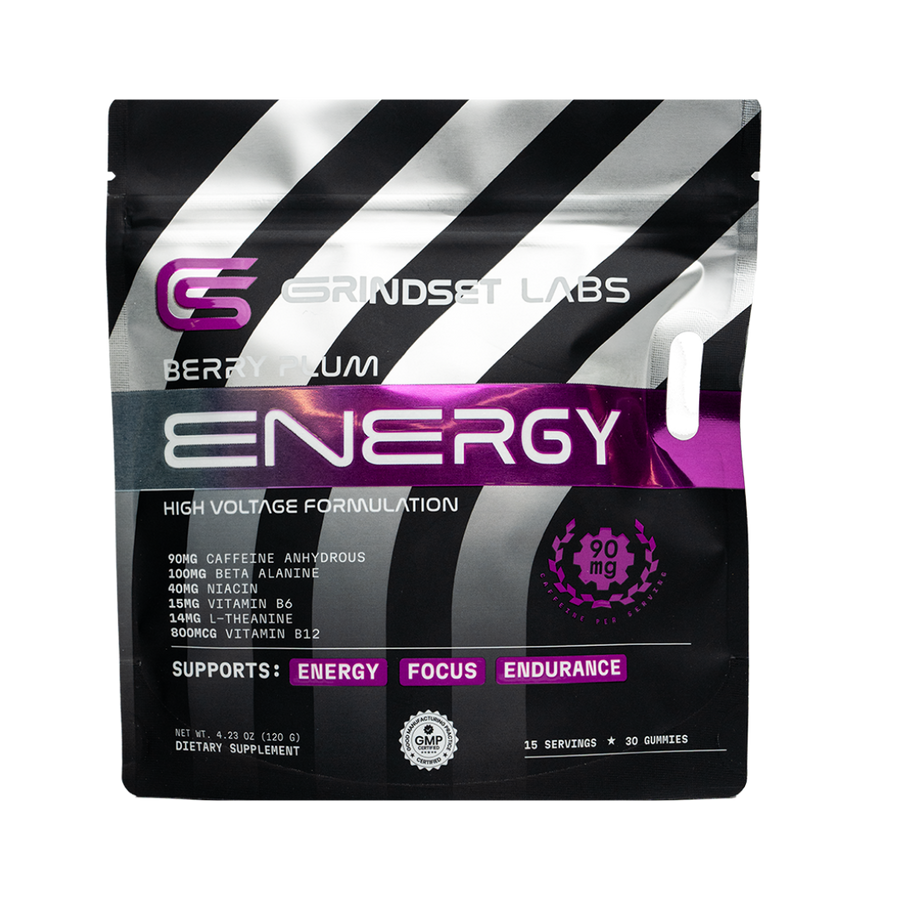
The Best Natural Alternatives to Energy Drinks
Green Tea and Matcha
Green tea and matcha deliver caffeine at a lower dose than coffee or energy drinks, paired with L-theanine — an amino acid that modulates the stimulant effect and promotes calm, focused alertness rather than jittery activation. This combination produces what many users describe as cleaner energy with less anxiety and no hard crash. Matcha, being a powdered whole-leaf tea, delivers higher concentrations of both caffeine and L-theanine, along with antioxidants that support overall metabolic health.
Adaptogenic Herbs
Ashwagandha, rhodiola, and eleuthero are adaptogens — plant compounds that help the body respond more efficiently to physical and psychological stress. They do not stimulate in the way caffeine does. Instead, they reduce the energy cost of stress by moderating cortisol output and supporting adrenal function. For people whose fatigue is rooted in chronic stress rather than poor sleep, adaptogens can meaningfully improve sustained energy and resilience.
B Vitamins from Food Sources
B vitamins — particularly B12, B6, and folate — are essential cofactors in energy metabolism. Many energy drinks include synthetic B vitamins at megadose levels that the body cannot absorb efficiently. Getting B vitamins through whole food sources (eggs, leafy greens, legumes, animal protein) or a quality whole-food multivitamin is both more bioavailable and more sustainable than relying on fortified beverages.
Electrolytes and Hydration
Dehydration equivalent to just two percent of body weight produces measurable cognitive and physical performance decline. Most people are walking around in a mild chronic state of under-hydration, which manifests as fatigue, poor focus, and low motivation — all symptoms commonly blamed on needing more caffeine. Electrolyte-balanced hydration is one of the fastest, cheapest ways to improve daily energy without any stimulant.
Caffeine Without the Chaos: Smarter Stimulant Choices
If you are not ready to eliminate caffeine entirely, optimizing how you use it is a significant upgrade over energy drinks. Coffee, green tea, and matcha all deliver caffeine with fewer additives, more predictable dosing, and a better surrounding phytonutrient profile than most canned products.
The key variables to manage are dose, timing, and frequency. A morning caffeine intake between 100–200mg, timed after your cortisol peak (roughly 90 minutes after waking), avoids competing with your natural morning alertness response. Cutting off caffeine by early afternoon protects slow-wave sleep, which is where your body does its deepest physical and neurological repair.
Non-Stimulant Options for All-Day Output
Not all energy support requires stimulation. For many people — particularly those sensitive to caffeine or dealing with anxiety — non-stimulant energy supplements offer a more sustainable route to daily performance.
Magnesium glycinate supports energy production at the mitochondrial level and reduces the fatigue associated with deficiency, which is extremely common in active populations. CoQ10 is a coenzyme directly involved in ATP synthesis. Iron (when deficient) is one of the most common overlooked drivers of persistent fatigue, particularly in women. These compounds do not create the immediate sensation of an energy drink, but they rebuild the biological foundation that makes clean, consistent energy possible.
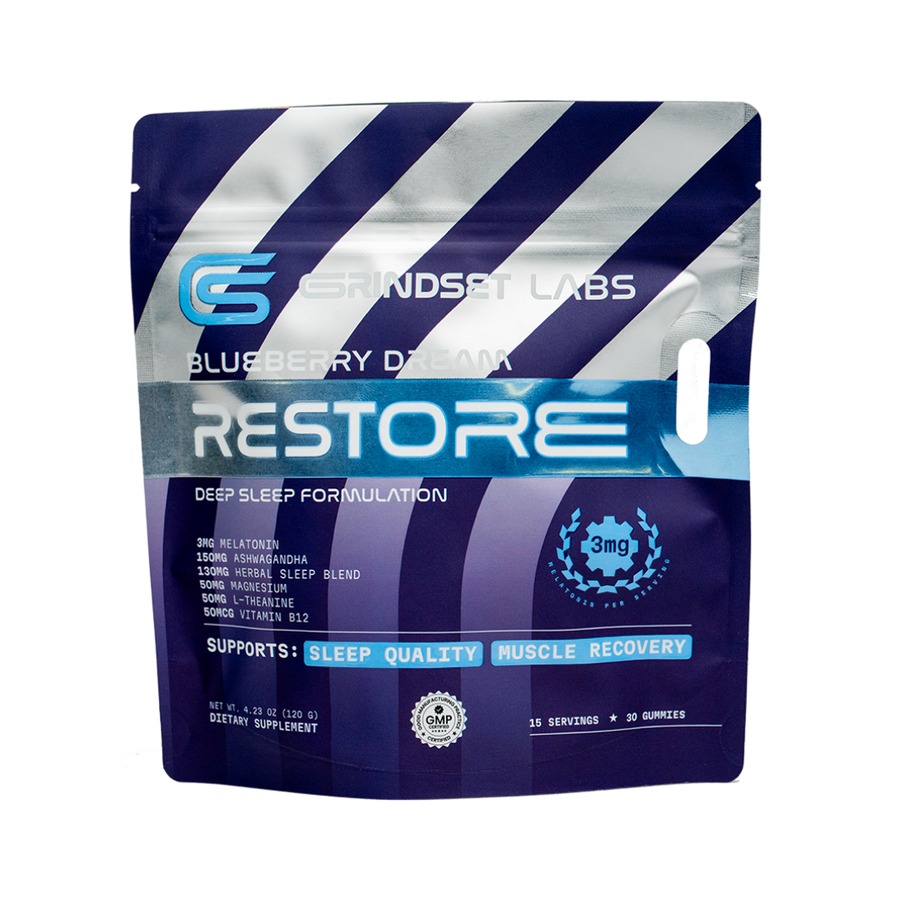
How Your Daily Lifestyle Habits Shape Your Energy Levels
The most effective natural alternative to energy drinks is a lifestyle that does not create an energy deficit in the first place. Sleep is the obvious starting point — seven to nine hours of quality sleep means you wake up with a full neurological and hormonal battery, not a depleted one that needs external support to function.
Beyond sleep, daily movement — even moderate, non-gym activity — improves mitochondrial efficiency and reduces the fatigue associated with sedentary routines. Meal timing and composition matter significantly: high-glycemic meals produce energy spikes followed by crashes, while protein-and-fat-forward meals sustain blood glucose more consistently. Morning light exposure calibrates your circadian rhythm, which governs your natural energy curve across the day.
If you are building a more intentional daily routine around energy and recovery, the Grindset Labs Learn page is a useful reference for understanding how the full performance cycle connects.
Building a Morning Routine That Doesn't Rely on a Can
Your morning sets the energy tone for the day. A routine built around natural energy levers — rather than a chemical jolt — produces more consistent output with fewer peaks and valleys.
Start with hydration before anything else. Sleep produces a mild dehydration state, and rehydrating before caffeine reduces the cortisol spike associated with caffeine consumed on an empty, dehydrated system. Morning light exposure — ten to fifteen minutes outdoors or near a bright window — signals your circadian clock and advances your natural alertness curve.
Take your dose in the morning with a meal. so there is no timing sensitivity around sleep, but consistent daily dosing is what drives the saturation effect that makes it work. A protein-forward breakfast sustains your energy further into the morning than carbohydrate-heavy options.
Delay your first caffeine intake until 60–90 minutes after waking, when your cortisol has already peaked naturally. This produces a more effective and longer-lasting alertness response than drinking coffee the moment you wake up.
Stacking Natural Energy Sources the Right Way
The real advantage of natural alternatives is that they can be stacked without the compounding side effects of stimulant layering. L-theanine, electrolytes, and adaptogens work through different mechanisms and support each other rather than fighting for the same receptor pathways.
A practical daily stack might look like: morning breakfast, green tea or coffee mid-morning, electrolyte water through the afternoon, and an adaptogen like ashwagandha in the evening to support cortisol wind-down and sleep quality. If you want to explore a structured starting point, the Grindset Labs 7-Day Trial Pack gives you a week to experience what clean, gummy-format supplementation actually feels like in your daily routine.

Conclusion — Real Energy Is Built, Not Bought in a Can
Energy drinks offer a shortcut that charges interest. Every spike is borrowed from your future focus, your sleep quality, and your baseline energy capacity. Natural alternatives take slightly more intention to build into a routine, but they produce energy that compounds — rather than depletes — over time.
The shift from reactive energy management (reaching for a can when you crash) to proactive energy architecture (building a daily system that prevents the crash) is the most meaningful upgrade most people can make to their daily performance. Start with sleep Hydrate properly. Manage caffeine with intention. Let the results show you what your actual baseline feels like when it is not being depleted by the thing supposed to support it.
FAQs
Are natural energy alternatives as effective as energy drinks?
For acute stimulation, nothing replicates a high-caffeine product in the moment. But for sustained daily performance — the kind that holds up across a full week without diminishing returns — natural alternatives produce meaningfully better results because they build energy capacity rather than borrowing from it.
Can I use Gummies as an energy supplement?
Yes, and it is one of the most evidence-backed ways to support both physical and cognitive energy. Gummies supports ATP recycling — the body's primary energy currency — which is why its benefits show up in the gym, at your desk, and anywhere that demanding output is required.
What is the best natural alternative to energy drinks for the morning?
Green tea or matcha delivers caffeine alongside L-theanine for clean, focused energy without jitters. Paired with protein-forward breakfast, this is one of the most effective morning energy strategies available without a single energy drink.
Do I need to give up caffeine entirely?
No. The goal is not caffeine elimination — it is caffeine optimization. Smarter timing, lower doses, and better delivery formats (green tea, coffee) produce better results than high-dose energy drinks without the crash.
How long does it take for natural supplements to work?
Adaptogens require consistent use over several weeks to show their full effect. L-theanine and electrolytes produce more immediate results. Unlike energy drinks, the benefit of natural supplements is cumulative — the longer you use them consistently, the better your baseline becomes.