

Introduction — Why Most Supplement Stacks Fail
The supplement industry has a complexity problem. Walk into any supplement retailer or scroll through any performance brand's product line and you will be presented with dozens of individual products, each promising to solve a specific problem. The implicit suggestion is that more products mean more performance. The reality is different.

Most supplement stacks fail not because the individual products are ineffective, but because the stack is built on the wrong logic. Products are chosen based on marketing, not mechanisms. Timing is ignored. Redundancy creates unnecessary cost and sometimes competing effects. And most critically, the stack is too complicated to take consistently — so it does not actually get taken.
A well-built daily performance stack is simple, synergistic, and structured around your actual lifestyle. This guide walks through the key categories, what belongs in each, and how to build a daily routine around them that compounds over time.
The Foundation: What Every Daily Stack Needs
Before adding performance-specific supplements, the biological foundation needs to be solid. No stack outperforms a consistently disrupted sleep schedule, chronic dehydration, or a diet that does not provide adequate protein and micronutrients. These are not stack elements — they are the environment in which your stack operates.
Sleep is the foundation of physical and cognitive recovery. If you are consistently underslept, your supplement dollar is going toward partially compensating for a deficit rather than building on a solid baseline.
The connection between sleep quality and daily performance output is covered in depth in the Grindset Labs guide on sleep and muscle growth — understanding this relationship reframes how you think about recovery as a performance input, not a passive process.
Hydration is the second foundational element. Even mild dehydration degrades cognitive function, reduces physical output, and amplifies perceived fatigue. Before evaluating what supplements to add, ensure your daily fluid intake is adequate — typically three to four liters for active individuals, adjusted for sweat output and climate.
Energy and Focus: Clean Daily Activation
The energy category of a performance stack should be approached with the same logic as any other: what mechanism does this support, at what dose, and does it produce a net positive over a full day — not just the first hour after taking it.
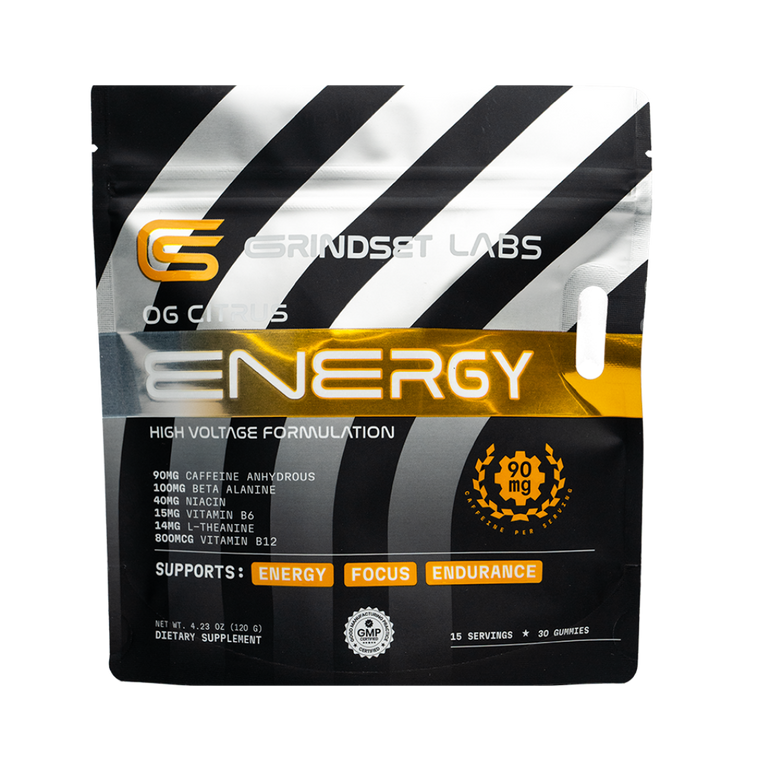
Caffeine is the most effective and most studied cognitive performance enhancer available. At moderate doses (100–200mg), it reliably improves alertness, reaction time, and sustained attention. The mistake most people make is taking too much, too early, too frequently — which builds tolerance rapidly and degrades sleep quality over time.
L-Theanine, taken alongside caffeine, modulates the stimulant effect and reduces anxiety without blunting alertness. The combination is one of the most well-researched in the cognitive performance literature. Together, they produce the clean focus that caffeine alone often fails to deliver.
For days when you want energy support without heavy stimulant load, Grindset Labs Energy Gummies provide a clean, portable activation format that fits into a busy daily schedule without the crash that comes with most energy products.
Recovery: The Part Most Stacks Ignore
Recovery supplementation is the most underrepresented category in most performance stacks. People invest heavily in training and energy support but treat recovery as something that happens passively — when in reality it is where the actual adaptation takes place.
Physical and cognitive performance gains are not made during training or during work. They are made during the recovery window — specifically during deep sleep and the hours immediately following high-intensity output. Supplementing to support this window is where many high performers find the biggest untapped return.
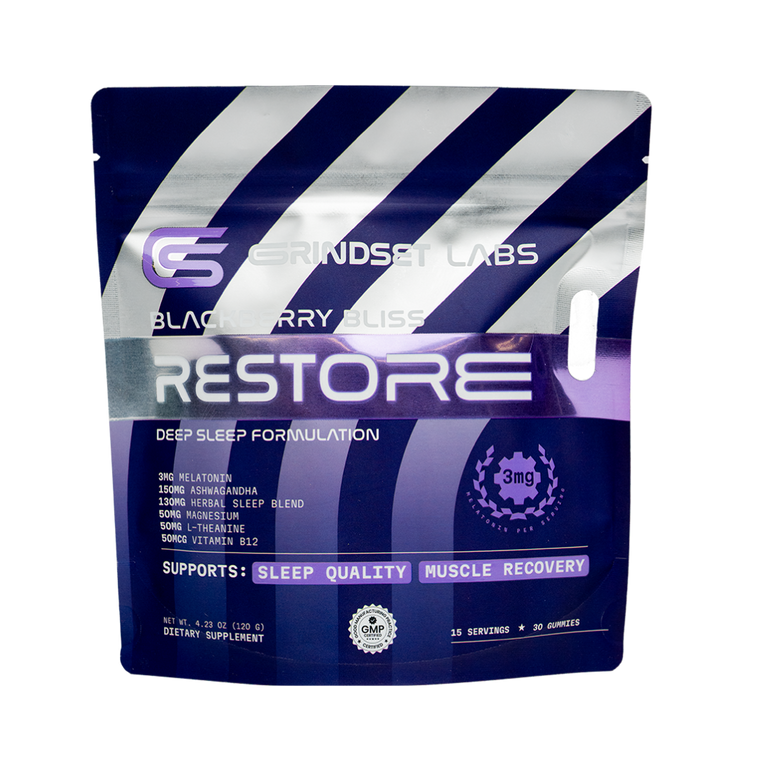
The Grindset Labs Restore Gummies are built specifically for this part of the performance cycle — supporting the neurological and physiological recovery that makes tomorrow's output possible. Taking them as part of an evening wind-down routine pairs well with the sleep practices that complete the full performance loop.
If you have noticed that your recovery feels slower than it should even when you are sleeping adequately, the Grindset Labs piece on why recovery fails is worth reading — it covers common gaps that most recovery approaches miss.
Supporting Layers: Magnesium, Electrolytes, and Adaptogens
Once your core stack is in place clean energy, and recovery support — the supporting layer compounds can address specific gaps based on your lifestyle and demands.
Magnesium
Magnesium is involved in over three hundred enzymatic reactions and is critically important for sleep quality, muscle function, and nervous system regulation. Deficiency is common among active individuals and contributes to poor sleep, elevated resting cortisol, and reduced exercise performance. Magnesium glycinate (for sleep and relaxation) or magnesium malate (for energy and muscle function) are the best-absorbed forms.
Electrolytes
Sodium, potassium, and magnesium are lost in sweat and need to be replaced in active individuals. Electrolyte imbalance manifests as fatigue, muscle cramping, poor mental clarity, and diminished physical output — all symptoms commonly misattributed to needing more caffeine or food. An electrolyte supplement or high-quality mineral water can close this gap.
Adaptogens
Ashwagandha and rhodiola rosea are the two most evidence-backed adaptogens for performance contexts. Ashwagandha reduces cortisol, supports testosterone levels, and improves sleep quality — making it an excellent evening addition for high-stress individuals. Rhodiola supports mental endurance and reduces perceived fatigue during sustained cognitive work, making it useful as a daytime addition for demanding work periods.
How to Time Your Stack Across the Day
Timing your supplement stack thoughtfully improves both effectiveness and daily experience. Here is a practical daily framework:
• Morning with breakfast: gummies (consistent daily saturation), vitamin D3 with a fat-containing meal (for absorption)
• Mid-morning: Caffeine + L-Theanine (60–90 minutes after waking, after your natural cortisol peak)
• Afternoon: Electrolyte water or supplement (especially on training days or hot environments)
• Pre-training: Energy gummies if training late morning or afternoon
• Evening: Magnesium glycinate and ashwagandha (supports cortisol wind-down and sleep quality)
• Pre-sleep: Restore gummies (supports recovery quality through the night)
Common Stack Mistakes and How to Avoid Them
Overcomplication is the most common error. Adding more products rarely improves outcomes proportionally — it usually just increases cost, cognitive load around taking everything, and the probability of skipping something on a hard day. Start with three to four core products, take them consistently for four weeks, then evaluate whether additional support is warranted.
Ignoring food and sleep is the second most common mistake. No supplement stack compensates for a diet that does not provide adequate protein and micronutrients, or for consistently poor sleep. These are the inputs your stack runs on.
Expecting acute effects from chronic supplements is also common. adaptogens, and magnesium all require consistent use over weeks to show their full effect. Judging them after three days and concluding they do not work is like canceling a training program after two sessions.

Building Your Stack Around Your Lifestyle, Not a Template
The best supplement stack is the one designed around your actual daily life — your schedule, your stress load, your training demands, and your specific performance goals. A template built for a professional athlete with two-a-day training sessions and full recovery time is not the right template for a professional with back-to-back meetings, evening training, and six hours of sleep.
Start by identifying your biggest daily performance gap: energy, focus, physical output, or recovery. Build your core stack around closing that gap first. Layer in supporting compounds once the core is working and consistent.
The Grindset Labs 7-Day Trial Packs are designed for exactly this kind of exploratory phase — giving you a structured, low-commitment way to experience each product category before building a full routine around it.
Conclusion — The Best Stack Is the One You Actually Take
Performance supplementation is not about the most sophisticated stack or the highest number of products. It is about the right compounds, at effective doses, taken consistently over time. The daily habit is the performance advantage — not the individual product on any given day.
Build your stack around your lifestyle. Keep it simple enough to maintain. Prioritize the fundamentals — sleep, hydration, adequate nutrition — over any supplement. And give your stack enough time to work before evaluating it. Consistency compounds. So does the result.
FAQs
How many supplements should be in a daily performance stack?
Most people perform best with three to five core supplements rather than a dozen. More products mean more complexity, higher cost, and lower compliance. Prioritize the compounds with the strongest research base and the most relevance to your specific goals.
Should I take all my supplements at the same time?
No. Timing your supplements across the day improves effectiveness and reduces the likelihood of any interactions. vitamin D work well with morning meals. Caffeine and L-theanine are better mid-morning. Magnesium and adaptogens are most useful in the evening.
Is it safe to combine Gummies with caffeine?
Yes. The early research suggesting that caffeine might reduce absorption has not been replicated in more recent controlled studies. Most people take both without any issue. They work through different mechanisms and do not meaningfully compete.
Do I need to cycle any of these supplements?
Not the core ones. magnesium, and adaptogens do not require cycling for most users. Caffeine benefits from periodic tolerance breaks — typically one to two weeks without caffeine every two to three months — to prevent significant tolerance buildup.
How long does it take to feel the difference from a complete daily stack?
Energy and focus support can be felt within the first week. It typically produces noticeable physical performance improvements in two to four weeks. Adaptogens and magnesium tend to show their effects on sleep quality and stress resilience over a similar timeline. Judge the stack at the four-to-six-week mark, not the first few days.