

Introduction — Creatine in Gummy Form: Gimmick or Genuine Upgrade?
Creatine is one of the most extensively studied performance supplements in existence. Decades of research back its benefits for muscle strength, power output, recovery, and — more recently — cognitive function. The question is not whether creatine works. That debate is settled. The question being asked more often now is whether the delivery format matters, and specifically whether creatine gummies work as well as the powder that has been the default for the past thirty years.
The short answer is yes — with qualifications. Creatine gummies can absolutely deliver effective doses of creatine in a bioavailable form, but the quality of the product matters enormously. This breakdown covers the science, what to look for, and how gummies fit into the kind of daily routine that actually drives results.

If you are newer to creatine and want the full context on what it does beyond the gym, the Grindset Labs article on creatine and cognitive function is worth reading first.
What Creatine Actually Does in Your Body
Creatine is a naturally occurring compound synthesized in the liver, kidneys, and pancreas from the amino acids arginine, glycine, and methionine. The body also obtains creatine from dietary sources, primarily meat and fish. It is stored in muscle tissue and the brain as phosphocreatine, where it serves as a rapid-access reserve for regenerating ATP — the primary energy currency of every cell.
When you perform high-intensity activity — a heavy set, a sprint, a cognitively demanding work session — your cells burn through ATP faster than aerobic metabolism can replenish it. Phosphocreatine donates its phosphate group to regenerate ATP immediately, allowing you to sustain peak output for longer before fatigue sets in. Supplementing creatine saturates these stores above baseline, which is where the performance benefit comes from.
The benefits of creatine saturation include improved strength and power output, faster recovery between sessions, reduced mental fatigue, better working memory under pressure, and — in sleep-deprived individuals — meaningful preservation of cognitive function. These are not marginal effects. They are consistently documented across hundreds of clinical trials.
Why Powder Has Dominated — and Why That Is Changing
Creatine monohydrate powder became the default format not because it is necessarily the best delivery mechanism, but because it was the first, the cheapest to produce, and the most studied. Powder dissolves in water (imperfectly — many users know the gritty texture issue) and provides a straightforward way to ingest a precise dose.
The drawbacks of powder are well known to anyone who has used it consistently. It requires mixing, it separates if not consumed immediately, the texture is often unpleasant, and incorporating it into a non-gym context — at work, while traveling, during a busy morning — requires carrying extra equipment and planning. Compliance is the hidden cost: if a supplement is inconvenient enough that you skip it on hard days, it is not actually delivering its benefit.
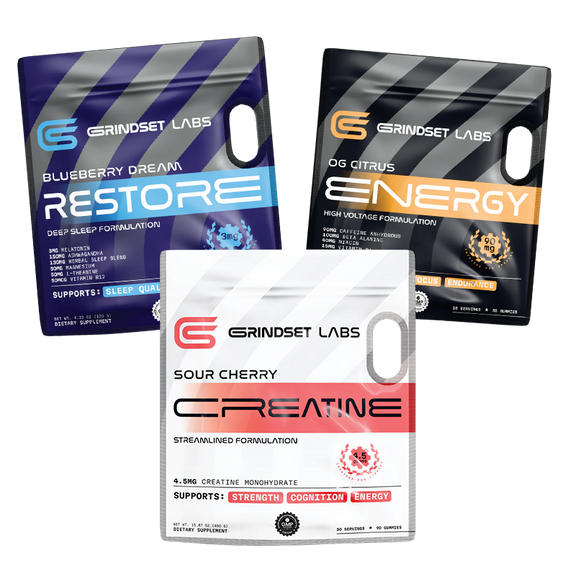
Gummy formats solve the compliance problem. They are portable, pre-dosed, require no mixing, and are palatable enough that people actually take them consistently. Consistency is the variable that determines whether creatine works for you — not whether you picked the ideal molecule form on any given day.
Do Creatine Gummies Absorb as Well as Powder?
Bioavailability is the key question, and the honest answer is that it depends on the formulation. Creatine monohydrate — the form with the strongest research base — is the same molecule whether it arrives in a gummy or a powder. What changes is the vehicle and how it is processed.
Well-formulated creatine gummies use creatine monohydrate at clinically relevant doses and are designed to disintegrate in the stomach efficiently, allowing absorption in the small intestine just as powder would. The concern that gummies somehow block or reduce absorption is not supported by evidence when the product is properly formulated. The gummy matrix does not meaningfully impair creatine bioavailability in quality products.
The real differentiation is dose. Some gummy products under-dose creatine to keep gummy count manageable or to reduce cost, which means users are not actually reaching the saturation threshold needed for the benefit. This is a product quality issue, not a format issue.
Grindset Labs formulates Creatine Gummies with full transparency on dosage — every ingredient and every amount is disclosed on the label, and each batch is third-party tested. That is the standard that should be expected from any creatine product, regardless of format.
What the Research Says About Gummy Delivery Formats
The specific research on creatine gummy bioavailability is still emerging compared to the decades of data on powder, but the broader literature on gummy supplement delivery is relevant. Studies on other compounds in gummy format generally show comparable absorption to tablets and capsules when the dosage is equivalent — particularly for water-soluble compounds like creatine monohydrate.
What the research consistently supports is that total daily creatine intake and consistency of use are the primary variables determining outcomes. Whether that dose arrives in a gummy or dissolved in water is secondary to whether you are actually taking it every day at an effective dose.
The cognitive benefits of creatine — which are among the less commonly discussed but well-documented outcomes — are particularly relevant for non-athletes. The Grindset Labs piece on creatine and brain performance covers this in depth and is worth reading if your interest in creatine extends beyond physical output.
How Creatine Gummies Fit Into a Daily Lifestyle
The strongest case for creatine gummies is not bioavailability — it is consistency. A supplement that fits seamlessly into your actual daily life is one you will take. One that requires extra steps, special conditions, or equipment will get skipped on the days you need it most.
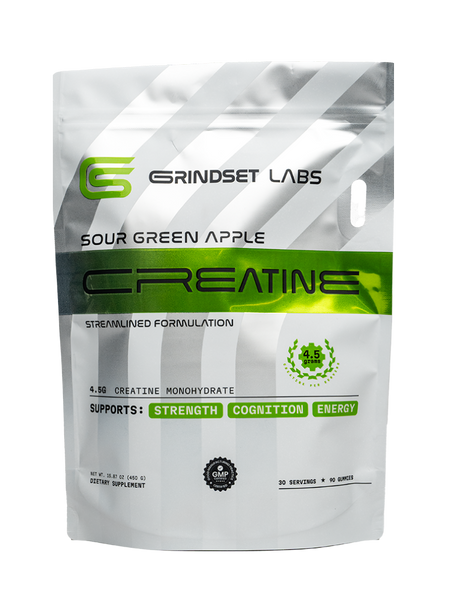
Creatine gummies sit on your desk, in your gym bag, in your car, or in your travel kit. You take them with breakfast, at your desk between meetings, or before a training session. There is no prep and no cleanup. For people with busy, mobile lifestyles — which is most people trying to perform at a high level — this convenience advantage is real and meaningful.
The daily lifestyle integration angle also matters because creatine is a chronic supplement, not an acute one. Unlike caffeine, which delivers its effect within minutes of consumption, creatine works by gradually saturating muscle and brain phosphocreatine stores over two to four weeks. This means the benefit only exists if you take it consistently over time. A format that makes daily compliance easy is genuinely better for outcomes.
Dosage: Are You Getting Enough?
The research-backed daily maintenance dose for creatine is three to five grams per day. Loading protocols (typically 20g/day for five to seven days) can accelerate saturation but are not required — most people reach the same endpoint through consistent daily dosing within three to four weeks.
When evaluating creatine gummies, the critical number is total creatine per serving. Many products require two, four, or even six gummies to reach a meaningful dose. This is not a problem if the total dose is still in the three-to-five-gram range and the gummies are palatable enough to take consistently. The problem arises when the dose per serving is too low to produce saturation at any reasonable intake level.
Check the Supplement Facts panel carefully. Look for the creatine monohydrate dose per serving and the serving size. Then calculate whether your daily intake actually reaches three to five grams. If it does not, the product is unlikely to produce the outcomes the research supports.
For those curious about creatine's benefits specifically for mental performance and focus — beyond the gym — this breakdown on creatine and mental performance provides useful context.
Who Benefits Most from Creatine Gummies?
Anyone who would benefit from creatine — which is most people — benefits from the gummy format if it makes them more consistent. Specific populations where gummies offer a particular advantage include people with busy schedules that make powder supplementation impractical, individuals who dislike the texture of creatine powder, those who do most of their supplementing away from home, and anyone who has previously tried creatine powder but struggled to maintain consistent daily intake.
Creatine is not only for athletes. Non-athletes, office workers, students, and older adults managing age-related cognitive and muscle changes have all been studied — with consistent findings. If you have a brain and a body you want to perform better, creatine is relevant.
The Grindset Labs overview of creatine for non-athletes makes this case well if you are not a gym-oriented user and are wondering whether creatine is relevant to your life.
What to Look for in a Quality Creatine Gummy
Not all creatine gummies are equivalent. Here is the standard to hold products to:
• Creatine monohydrate as the form — not cheaper or less-studied alternatives
• A clearly disclosed dose of at least three grams per serving
• Third-party testing confirmation on the label or website
• No proprietary blends that hide individual ingredient amounts
• Ingredient list you can actually read without a chemistry degree
If you want to trial the format before committing to a full-size product, the Grindset Labs Creatine 7-Day Trial Pack is a low-stakes way to see how gummy-format creatine fits into your daily routine.
Conclusion — Creatine Gummies Work. Here's the Nuance.
Creatine gummies work when they are properly formulated, accurately dosed, and taken consistently. The gummy format does not compromise the effectiveness of creatine — it removes the friction that causes inconsistent use, which is the primary reason most people fail to see results from any supplement.
The legitimate criticism of creatine gummies is not the format — it is that many products in this category under-dose creatine to make the serving size manageable or the cost competitive. Do your due diligence on dosage, prioritize products with transparent labeling and third-party testing, and take them every day. That is the formula for making creatine gummies — or any creatine product — work.
FAQs
Do creatine gummies need to be taken before or after a workout?
Timing is not critical for creatine. Because it works by saturating stores over weeks rather than producing an acute effect, the important variable is consistent daily intake — not whether you take it pre or post training. Taking it at a time you will reliably remember is more important than any specific timing window.
How many creatine gummies should I take per day?
This depends entirely on the dose per gummy. The target is three to five grams of creatine monohydrate per day. Read the label to determine how many gummies that requires for the product you are using.
Can women take creatine gummies?
Yes. The research on creatine benefits applies equally across sexes. Women tend to have lower baseline creatine stores, which means supplementation often produces a more pronounced relative effect. There is no reason to avoid creatine based on sex.
Will creatine gummies cause bloating?
Creatine monohydrate can cause mild water retention in muscle tissue — this is part of the mechanism by which it works. This is not the same as digestive bloating. Some people experience initial mild gastrointestinal discomfort during a loading phase, which is one reason many practitioners prefer steady daily dosing without loading.
How long before I see results from creatine gummies?
Physical performance improvements typically become noticeable within two to four weeks of consistent daily supplementation at an adequate dose. Cognitive benefits can appear in a similar timeline. The full saturation effect takes approximately four weeks of daily use at a maintenance dose.